
Why Does Honey Crystallise? The Truth About Natural Honey
Have you ever opened a jar of honey and discovered that it has become thick, cloudy or almost solid? Before you worry, there is something interesting you should know. Honey crystallisation is a completely natural process and one of the fascinating characteristics of this golden food.
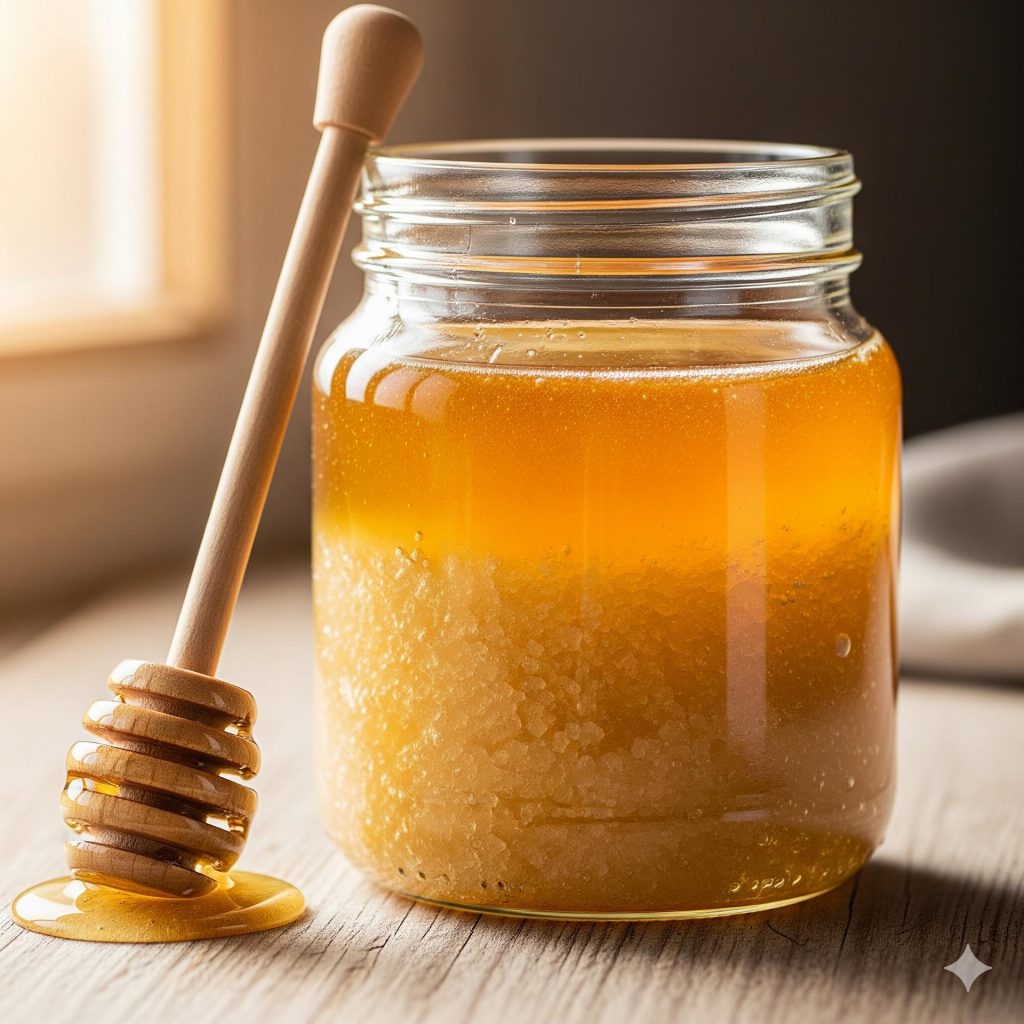
Some people love their honey smooth and runny, while others prefer the thick, creamy texture of crystallised honey. But why does it happen, which types crystallise faster and can you bring honey back to its liquid form? NATURAL HONEY NATURAL HONEY Liquid Honey Crystallised Honey
The same natural honey can have two very different textures.
1. What Is Honey Crystallisation?
Honey is mainly made up of natural sugars and water. Two of its most important sugars are glucose and fructose.
Honey contains more dissolved sugar than the available water can comfortably keep in solution. This is known as a supersaturated solution.
Over time, glucose begins to separate from the liquid and forms tiny crystals. As more crystals develop, the honey becomes thicker and can eventually turn into a semi-solid or solid mass.
This process is also known as granulation. It is a natural physical change in the structure of honey.
Did you know? Crystallisation does not automatically mean that honey has gone off, has been mixed with ordinary sugar or is poor quality.
2. Why Does Some Honey Crystallise Faster Than Others?
Not all honey behaves in the same way. Some jars remain beautifully runny for a long time, while others begin to crystallise relatively quickly.
The main reason is the natural balance between glucose and fructose.
Glucose
Glucose is less soluble in water than fructose. Honey containing a higher proportion of glucose generally crystallises more quickly because glucose can separate from the liquid and form crystals.
Fructose
Fructose is more soluble in water. Honey with a higher proportion of fructose tends to remain liquid for longer.
Water content and temperature
The moisture content of honey and its storage temperature also influence crystallisation. Tiny particles, including pollen grains and wax particles, can provide surfaces where crystals begin to form. Liquid honey Growing crystals Crystals
Glucose gradually separates from the liquid and forms crystals.
3. Which Types of Honey Crystallise Quickly?
The floral source of honey plays an important role in its natural sugar composition. This is why different varieties have different crystallisation patterns.
| Honey Type | Typical Crystallisation |
|---|---|
| Rapeseed Honey | Very fast |
| Sunflower Honey | Often fast |
| Wildflower Honey | Varies depending on floral sources |
| Forest Honey | Generally slower |
| Acacia Honey | Usually very slow |
These are general tendencies rather than fixed rules. The exact composition of each batch, harvesting conditions and storage can change how quickly honey crystallises.
Why Does Acacia Honey Stay Liquid Longer?
Acacia honey is known for its light colour, delicate flavour and naturally slow crystallisation.
This is mainly associated with its relatively high fructose content compared with glucose. As fructose remains dissolved more easily, acacia honey can stay liquid considerably longer than many other varieties. ACACIA HONEY Delicate flavour and slow crystallisation
Acacia honey is often one of the slowest varieties to crystallise.
4. Does Crystallised Honey Mean It Is Pure?
Crystallisation is a natural characteristic of honey, but it is not a reliable test of purity.
Both genuine honey and honey that has been processed or blended can crystallise. Equally, some genuine honey varieties can remain liquid for a long time.
The speed of crystallisation depends on several factors, including the sugar composition, moisture, floral origin, temperature and processing.
If you want to understand the quality and origin of honey, look for reliable product information, traceability and details about its producer.
5. How to Make Crystallised Honey Liquid Again
Good news! If you prefer runny honey, you can gently warm crystallised honey to dissolve the sugar crystals.
Step 1: Prepare warm water
Fill a bowl or saucepan with warm water. Avoid boiling water or excessive heat.
Step 2: Place the honey jar in the water
Make sure the lid is secure and the water level stays below the lid. If the jar is made of glass, avoid sudden temperature changes.
Step 3: Allow the honey to warm gradually
Leave the jar in the warm water and stir the honey occasionally if possible. Replace the water if it becomes cold.
Step 4: Check the consistency
Once the crystals have dissolved and the honey has returned to a liquid consistency, remove the jar and dry it before storing.
Important: Use gentle warmth and avoid overheating. Prolonged exposure to high temperatures can affect honey’s aroma, flavour and quality. A water bath below approximately 40°C is a gentle approach. NATURAL HONEY A gentle warm water bath
Warm water helps dissolve the crystals without exposing honey to direct heat.
6. How Should You Store Honey?
Good storage helps preserve the natural characteristics of honey.
- Keep honey in a tightly closed container.
- Store it in a cool, dry place away from direct sunlight.
- Avoid storing honey in the refrigerator, as cooler temperatures can encourage crystallisation.
- Always use a clean, dry spoon.
- Keep water and other food particles out of the jar.
If honey develops an unusual sour smell, foaming or signs of fermentation, do not assume that it is simply crystallising. Check the product carefully and avoid consuming honey that appears spoiled.
7. Is Crystallised Honey Safe to Eat?
In general, properly stored crystallised honey is perfectly suitable for eating. The change in texture alone does not mean that the honey has spoiled.
Many people actually prefer crystallised honey because it is thicker and easier to spread on toast, bread or pancakes.
Some producers also carefully control the crystallisation process to create smooth, creamy honey with small, evenly distributed crystals.
8. Why Do Some People Prefer Creamed Honey?
Creamed honey is produced by controlling the crystallisation process. Fine crystals are distributed throughout the honey, creating a smooth and spreadable texture.
It is still honey. The difference is mainly in its texture and the way crystallisation is managed.
Creamed honey is particularly popular as a spread because it is easier to handle and less likely to drip than runny honey.
Frequently Asked Questions About Honey Crystallisation
Does real honey always crystallise?
Most honey varieties crystallise eventually, although some remain liquid for much longer. The speed depends on their natural composition and storage conditions.
Why has my honey turned white?
Crystallised honey often looks lighter or cloudy because tiny glucose crystals scatter light. This is a common natural change.
Can I eat honey that has gone hard?
Yes. If it has been stored correctly and shows no signs of spoilage, crystallised honey is generally safe to eat.
Does putting honey in the fridge make it crystallise?
Refrigeration can encourage changes in texture and may promote crystallisation. A cool, dry cupboard is generally a better place to store honey.
How long does it take for honey to crystallise?
There is no fixed timeframe. Some varieties crystallise relatively quickly, while others can remain liquid for months or longer.
Can I microwave crystallised honey?
It is better to use a gentle warm water bath. Microwaves can heat honey unevenly and create hot spots that may affect its quality.
Is liquid honey better than crystallised honey?
Neither texture is automatically better. Both are natural forms of honey, and the choice largely comes down to personal preference.
Discover the Natural World of Honey
Every variety has its own colour, aroma, flavour and texture. Explore the wonderful diversity of honey and discover something new with Sweet Honey Co. Explore Our Honey Collection
Scientific References and Further Reading
- FAO: Value-Added Products from Beekeeping
- Royal Society of Chemistry: Sugars in Honey
- Analytical Rheology of Honey: A State-of-the-Art Review
- Scientific Reports: Research on Honey Crystallisation
This article is provided for educational purposes. Honey composition and crystallisation behaviour vary according to botanical origin and storage conditions.