Have you ever wondered what bees eat to stay busy, healthy and productive? These remarkable insects spend their days searching for food, visiting flowers and collecting the natural ingredients that help their colonies grow. Their diet is closely connected to the production of honey and other valuable bee products.
Honey bees rely mainly on nectar and pollen collected from flowers. They also need water and, at times, other sources of natural sugars. Each food source has a different role in the life of a bee colony.
How Do Bees Find Their Food?
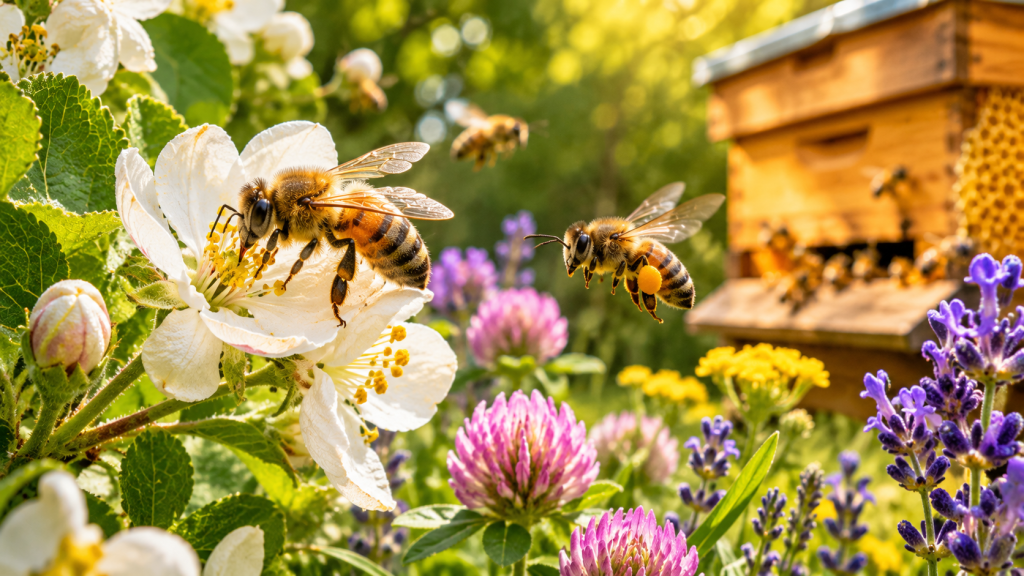
The process of searching for food is called foraging. Worker bees leave the hive and visit flowers, looking for nectar and pollen. They can travel considerable distances when nearby food sources are limited.
Bees are attracted to flowers by their colours, shapes and scents. Once a worker bee finds a suitable source of food, it collects what the colony needs and returns to the hive. Other bees can then follow information shared by the returning forager.
1. Nectar: The Main Source of Energy
Nectar is a sweet liquid produced by flowers. It contains natural sugars that provide honey bees with energy for flying, foraging and carrying out their daily activities.
Worker bees collect nectar using their long tongues and store it in a special internal organ often called the honey stomach. They carry it back to the hive, where other worker bees help process it and turn it into honey.
Honey is stored in the honeycomb and provides the colony with an important food reserve, particularly when flowers are scarce or the weather makes foraging difficult.
2. Pollen: An Important Source of Protein
Pollen is a fine powder produced by flowers. It is often yellow, although its colour can vary depending on the plant. As bees move between flowers, pollen sticks to their bodies and is collected in special pollen baskets on their hind legs.
Unlike nectar, which mainly provides energy, pollen supplies bees with protein, fats, vitamins and minerals. These nutrients are especially important for feeding young bees and supporting the development of the colony.
Bees also play an important role in pollination. When they visit another flower, some of the pollen they carry is transferred to it. This natural process helps many plants produce seeds and fruit.
3. Bee Bread: Fermented Pollen Stored in the Hive
After returning to the hive, worker bees store pollen in the honeycomb. They mix it with nectar and honey, together with natural substances from the hive. The mixture undergoes fermentation and becomes known as bee bread.
Bee bread is an important food for the colony. It is particularly valuable as a source of protein and nutrients for developing larvae and young bees.
Bee bread is also available as a bee product for people. It is naturally rich in nutrients and is used by some consumers as part of their diet.
4. Do Bees Drink Water?
Yes. Water is another important part of a honey bee’s diet. Bees collect water from natural sources such as ponds, streams and other suitable places.
Inside the hive, water helps bees regulate temperature and maintain suitable conditions. It is also used when preparing food for developing larvae.
5. Do Bees Eat Honey?
Yes. Honey is an important food reserve for honey bees. It provides energy and helps the colony survive periods when flowers are not producing enough nectar.
During colder months, when bees cannot forage as easily, they use the honey stored in their hive. This is one reason why honey production and storage are so important to the survival of a colony.
Why Are Nectar and Pollen So Important?
Nectar and pollen perform different but complementary roles in a bee colony:
- Nectar: provides natural sugars and energy.
- Pollen: supplies protein, fats and other nutrients.
- Bee bread: provides stored, fermented pollen as food for the colony.
- Honey: acts as an energy-rich food reserve.
- Water: supports the bees’ daily needs and helps regulate the hive environment.
How Can We Help Bees Find Food?
There are simple ways to make gardens and outdoor spaces more welcoming to bees. Planting flowers that produce nectar and pollen can provide useful food throughout the flowering season.
- Grow a variety of flowering plants.
- Choose flowers that bloom at different times of the year.
- Leave some areas of the garden natural and undisturbed.
- Avoid using pesticides where possible.
- Provide a shallow source of water with stones or landing places for insects.
Frequently Asked Questions
What is the main food of honey bees?
Honey bees mainly collect nectar and pollen from flowers. Nectar provides energy, while pollen supplies protein and other nutrients.
Do bees eat pollen?
Yes. Pollen is an important part of their diet. It is collected from flowers and stored in the hive, where it can be used to prepare bee bread.
What is bee bread?
Bee bread is fermented pollen stored in the honeycomb. It is an important source of protein and nutrients for the bee colony, especially developing larvae.
Do bees eat honey in winter?
Yes. Honey stored in the hive provides an important source of energy when cold weather or a lack of flowering plants prevents bees from collecting fresh nectar.
Do bees need water?
Yes. Bees collect water to support their daily activities and help maintain suitable conditions inside the hive.
Discover Natural Bee Products
Bees give us more than honey. Explore our selection of natural honey and bee products at Sweet Honey Co.
Explore Our Shop